


Conventional mobile hydraulic systems often have low efficiency because their design and operating priorities traditionally favour low investment cost, high productivity and robustness over maximum energy efficiency.
– Those priorities are changing, however, as the importance of avoiding greenhouse gas emissions and rising energy costs increases. Research is under way on many different ways to improve efficiency, including energy recovery and reduced throttling losses. Electrification of mobile machinery is a significant part of that trend.
Both opportunities and challenges
In mobile working machines, combustion engines are therefore increasingly being replaced by electric motors with the primary aim of minimizing CO2 emissions.
– At the same time, switching to electric drive brings both opportunities and challenges for hydraulic systems. For example, the low efficiency of conventional hydraulic systems is not acceptable because of the battery size and cost that would otherwise be required. By using electrically driven pumps, electrohydraulic energy converters, it becomes possible to introduce speed control, energy recovery and new system architectures with more flexible control, explains Thomas Heeger.
This is often done by combining hydraulic systems with electric motors already available on the market.
– One problem is that conventional hydraulic machines, hydraulic pumps and motors, are often not optimized for being combined with electric motors, which means there is room for improvement.
His thesis focuses on two improvement areas: developing hydraulic machines that better match the characteristics of electric motors, and integrating hydraulic machines with electric motors.
– Electric drive places new demands on hydraulic machines, including higher efficiency, a wider operating speed range, both lower and higher, reduced noise emissions, and multi-quadrant capability for energy recovery and greater system flexibility. Variable displacement can also be desirable, since it may reduce the required size of the electric motor, but displacement-control losses need to be minimized. My research aims to support development in those areas.
Combining motor and pump into one unit
One ambition in the doctoral project has been to find a way of making the combination of electric motor and hydraulic system more compact.
– The electrohydraulic energy converters available today combine hydraulic systems and electric motors through axial stacking. An alternative is radial integration, placing the hydraulic system in the centre of the electric motor. Another option is to use a gearbox between the hydraulic and electric machines, which makes it possible to reduce the dimensions of the electric motor.
If the hydraulic system is installed in the centre of the electric motor, the result is a more compact unit with several advantages.
– For mobile working machines, taking up less space is a clear advantage, since reduced volume and weight are beneficial. A compact unit, with motor and hydraulic system in one, also creates better conditions for more decentralized hydraulic systems. Today, several cylinders are often driven by the same pump, which creates certain coordination losses. Efficiency would increase if several small compact motor-pump units were placed where hydraulic force is needed, instead of one larger central hydraulic unit.
A compact prototype
In his work, Heeger has chosen to place the hydraulic pump in the central part of the electric motor, an area that does not contribute to torque generation.
– One of the benefits of electrification is that the electric motor can function both as a motor and as a generator. In a hydraulic pump, mechanical energy is converted into hydraulic energy, and the reverse can also be done, hydraulic energy can be converted back into mechanical energy. But that reverse function cannot be fully utilized if the system is driven by a diesel engine. Using an electric motor instead therefore creates new possibilities for energy recovery. Another advantage is power on demand, meaning the motor only needs to run when the system actually requires energy.
During his doctoral project, he collaborated with Volvo CE, which has built a prototype that will now be tested.
Hydrostatic pockets enable lower speeds
One of the problems that occurs when switching from diesel to electric drive is that it becomes difficult to exploit the electric motor’s benefits at low speeds, because hydraulic systems do not always tolerate such operating conditions well.
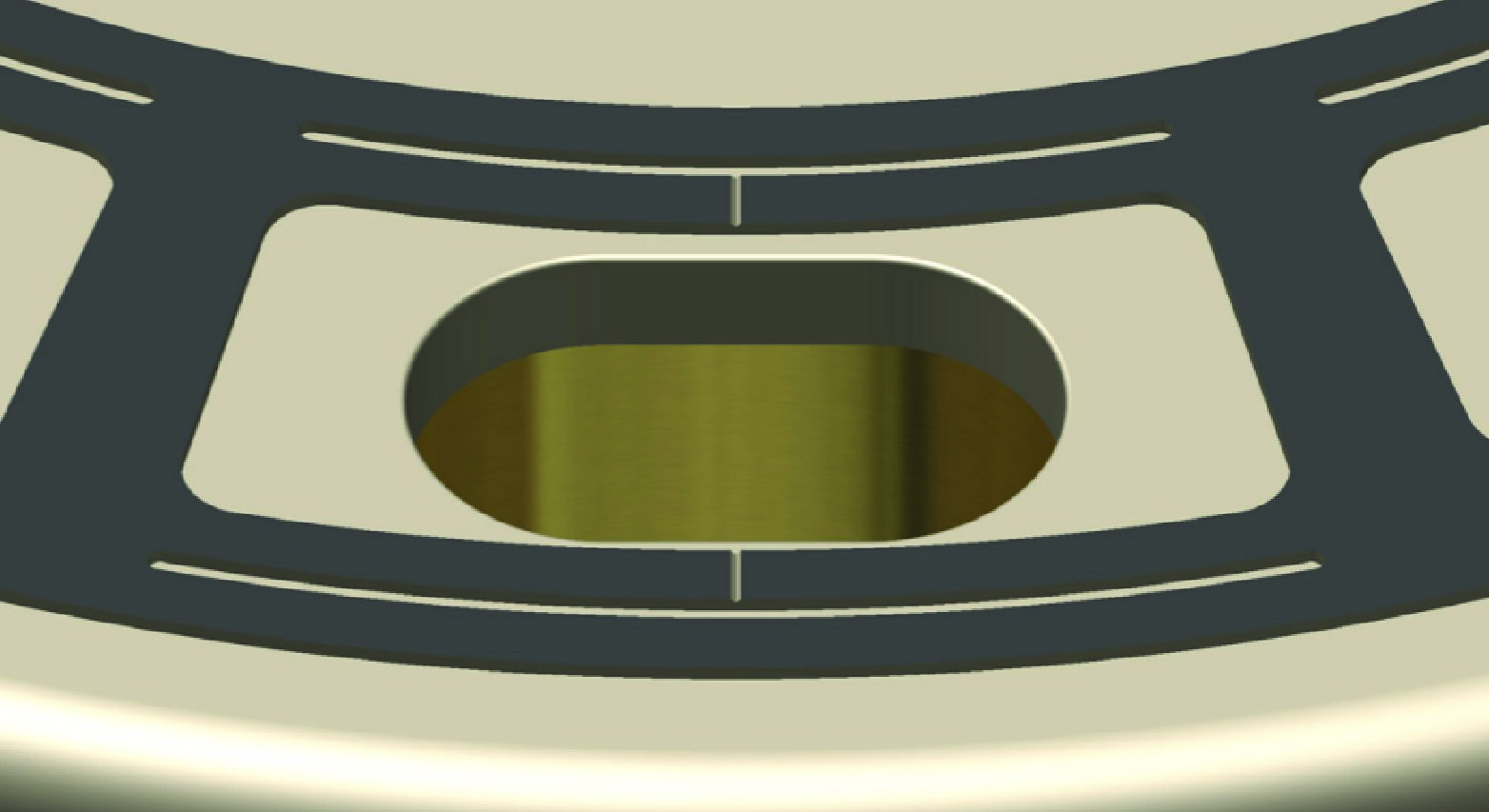
– To prevent excessive wear on hydraulic components, a thin oil film is needed between them, and at low speeds that film is difficult to maintain. We have simulated the use of hydrostatic pockets in the interface between the valve plate and the cylinder barrel, which can improve efficiency and avoid wear at very low speeds.
Thomas Heeger has also collaborated with a university in the United States, where he spent time helping develop an advanced simulation tool. There they tested models and observed positive effects from using hydrostatic pockets.
– They allow the pump to run at lower speeds and in that way let the electric motor operate over a more variable speed range.
Noise becomes a key issue
Another aspect addressed in his thesis is the combined sound profile of a hydraulic system once the diesel engine has been replaced by an electric motor, an area that has not yet been well explored.
– The perception of sound is complex. Whether it is disturbing depends on several factors, not just high decibel levels. The work I have carried out in the thesis can be seen as a starting point for further studies of the noise profile, by providing background information on sound sources and harmonic frequencies for both the electric motor and the hydraulic system.
Noise is one of the biggest challenges in electrifying hydraulic systems for mobile working machines. Without the masking sound of a combustion engine, the distinct sound of the hydraulic pump becomes much more audible and therefore has to be reduced. One thing he has done is have people listen to audio files generated from simulation results of different electrically driven pump configurations, such as speed control, displacement control and multi-pump systems.
– The sound profile differs quite a lot between the different systems. It is still not clear which system sounds best or worst. But it became quite clear that higher speeds, which are desirable if you want to reduce component size, also create greater challenges in terms of sound.
Although electric motors are much quieter than hydraulic pumps, their noise spectrum also contains narrow-band emissions at distinct frequencies. In addition to minimizing the noise contribution from each individual component, the interaction between components should be such that total noise is reduced.
– The interaction between hydraulic pumps and electric motors in terms of noise generation has still not been fully investigated. More studies are needed to gain a complete understanding, Thomas Heeger concludes.


