


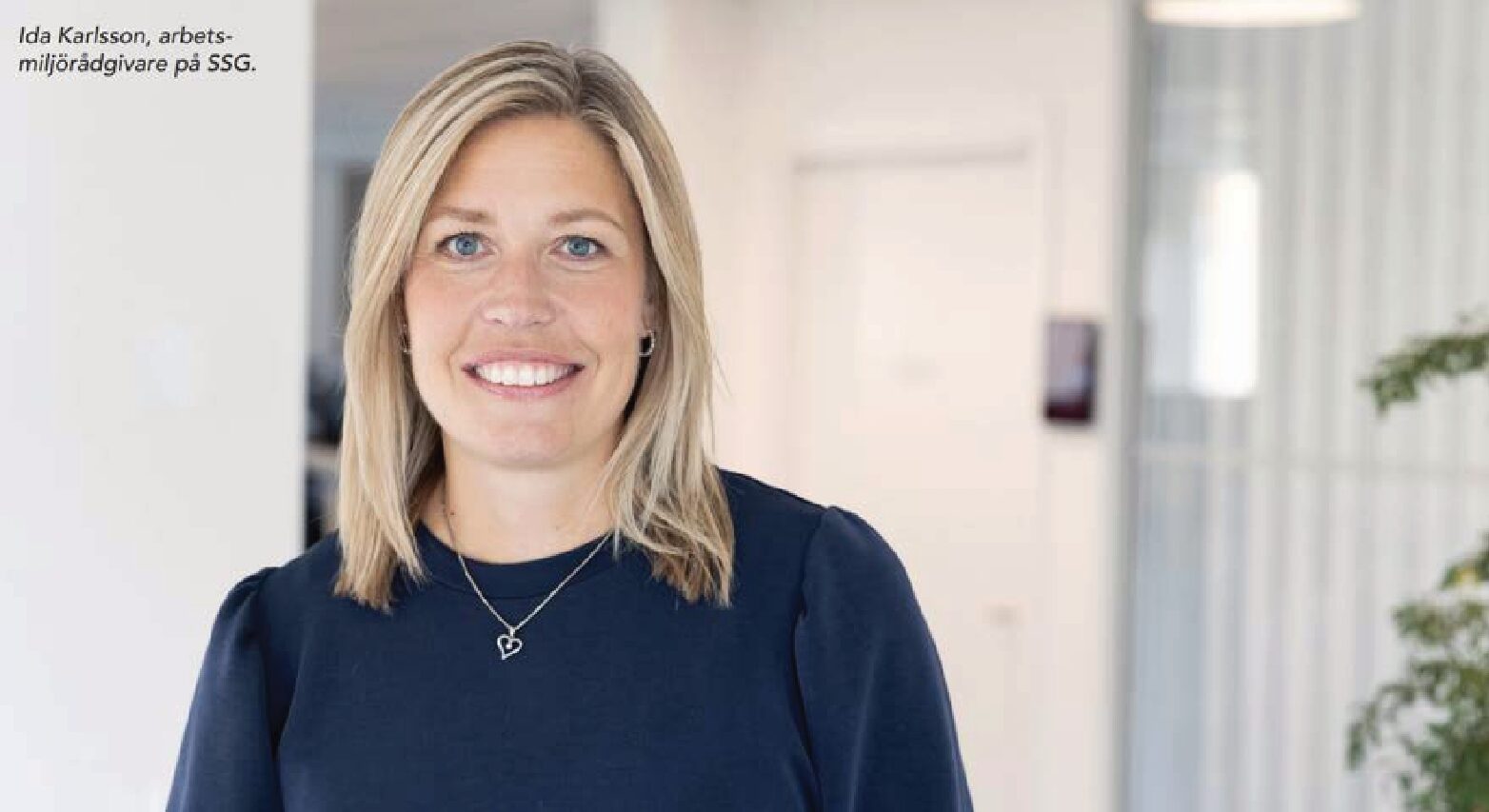
This is stated by Ida Karlsson, who is a work environment adviser at SSG, Standard Solution Group. Since the 1950s, SSG has worked together with industry to find the best solutions to shared industrial challenges. This collaboration has among other things resulted in standards that guide the entire life cycle of a facility, from planning to dismantling.
– We have, for example, developed SSG 3800, which specifies and clarifies the points in SS-EN ISO 4413:2010 that must be fulfilled by hydraulic equipment, or equipment in which hydraulics is included. We also offer safety and work environment training in our e-learning portfolio and services such as our communication app SSG On site with modules for digital work permits and driving permits. My role as an adviser includes taking part in the development of our courses and products to ensure that they meet legal requirements and to provide general advice in the field of work environment.
Human-Technology-Organisation
One reflection that has emerged in cooperation with customers, and while developing courses, standards and other work environment solutions, is that people rarely talk about employees’ mental health and how they feel within the group and at the workplace.
– We mainly work with industrial companies, and there is traditionally a somewhat macho culture there, where you are not supposed to show weakness or concern. It is also important to be part of the group, which means that people are often reluctant to say, for example, that a colleague is not using the right safety equipment and is putting themselves or others at risk.
This creates challenges in the technical industry when it comes to talking about anything other than technology, about softer issues.
– That is why we always try to bring more aspects of working life into discussions about the work environment and safe work. It is about finding a balance between Human-Technology-Organisation and understanding that the three perspectives are always connected.
Leadership crucial for a safe workplace
It is important that all employees feel safe enough to talk about things they do not feel comfortable with.
– People must dare to talk about incidents that occur and may constitute danger, and they must also feel safe enough to question if things are not being handled or functioning as they are supposed to. Leadership is extremely important if you want to create that kind of workplace.
Managers need to understand that it can be difficult to have such conversations without fearing negative consequences.
– In order not to risk ending up outside the group, there must be such a strong sense of safety within the group that everyone appreciates and understands the value of raising things that they see, even if it is a colleague who has missed something.
In order to create that kind of positive group dynamic, the manager needs to invite employees into the safety work.
– By creating participation within the group, it becomes easier for employees both to understand why different safety measures are needed and to want to carry them out, because they themselves have been involved in deciding on them. Participation is one of the most important parts of creating a safe workplace.
Behaviour-based safety
It is also about managers not needing to feel pressure to know everything best.
– No one can know everything. A manager must allow themselves to show humility and respect for employees’ knowledge. With a sense of safety in the group built on mutual respect, everyone will take shared responsibility for safety and the work environment.
Based on insights into the value of building safe groups, it has become more common to work with what is known as Behaviour-Based Safety, BBS, which is based on long-term research in behavioural psychology.
– It means focusing on behaviours, confirming safe behaviours and also giving feedback on unwanted behaviours. By identifying and reinforcing safe behaviours before an accident occurs, you not only reduce risks, you also build a culture in which safety is a natural and integrated part of every employee’s everyday life.
Benefits of psychological safety
The benefits that Ida Karlsson and her colleagues usually highlight regarding psychological safety at work include:
• Confidence in talking about mental health – An open culture in which employees can discuss how they are feeling and their health leads to better wellbeing.
• Increased reporting of safety risks – Employees dare to point out shortcomings and potential hazards in time.
• Improved communication and collaboration – Groups work more effectively and share information openly.
• Higher engagement and motivation – Employees feel that their views are valued and taken seriously.
• Lower accident frequency – Because risks are detected, reported and managed early, there are fewer workplace accidents.
Recommendations for how to achieve it
• Promote openness around mental health – Create a work environment where employees feel comfortable talking about how they are doing and getting the support they need.
• The role of leadership – Managers and supervisors must lead by example by encouraging openness and listening actively to employees’ views.
• Establish a “no blame” culture – Errors and mistakes should be seen as opportunities for learning rather than reasons for punishment.
• Encourage feedback and dialogue – Regular safety meetings and open discussions promote a safe and transparent work environment.
• Education and training – By educating staff about the importance of psychological safety, a culture is created in which everyone feels responsibility for safety.


